Title here
Summary here
Everything an NGO case management team needs — registration, case tracking, reporting, and access control.
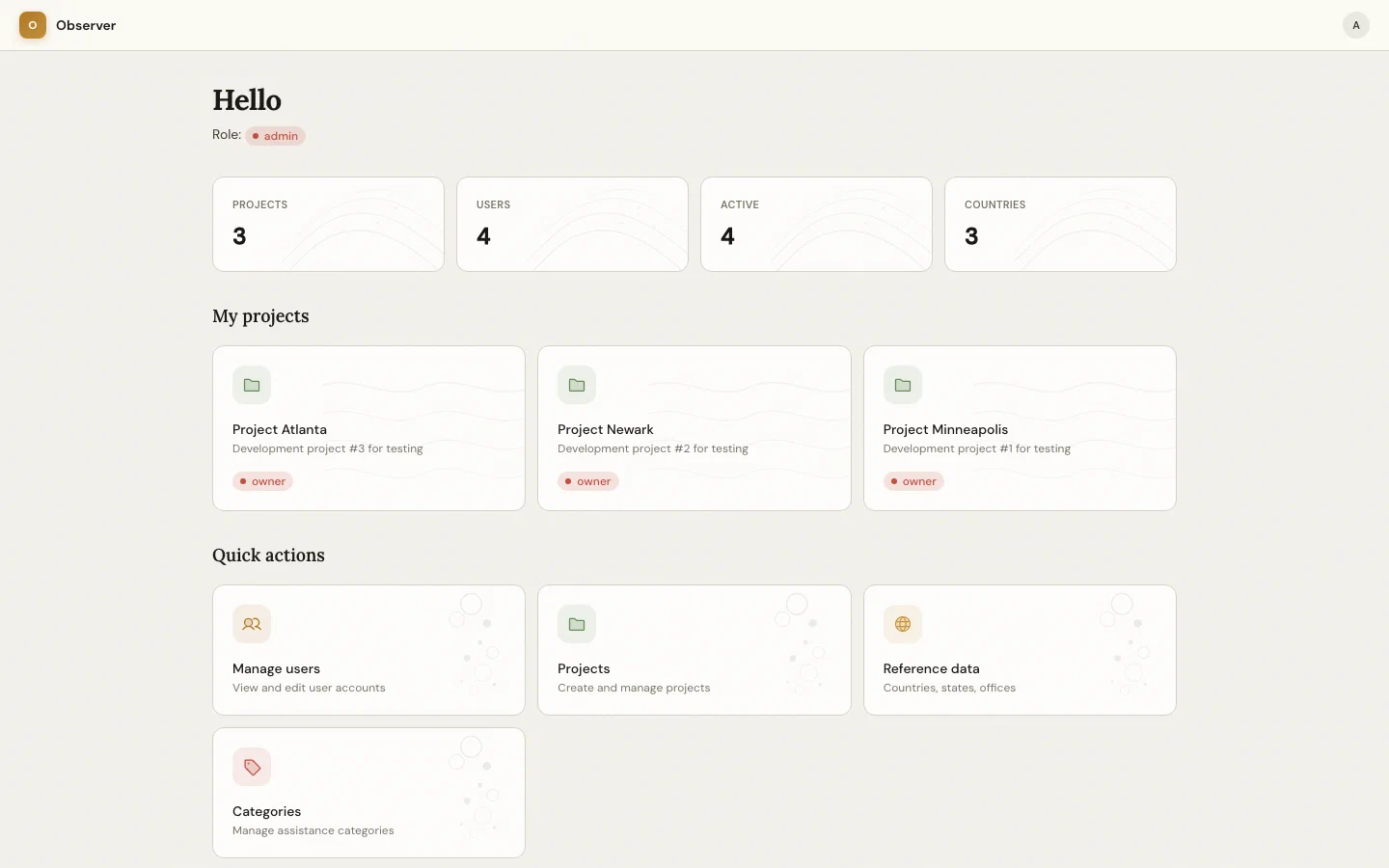
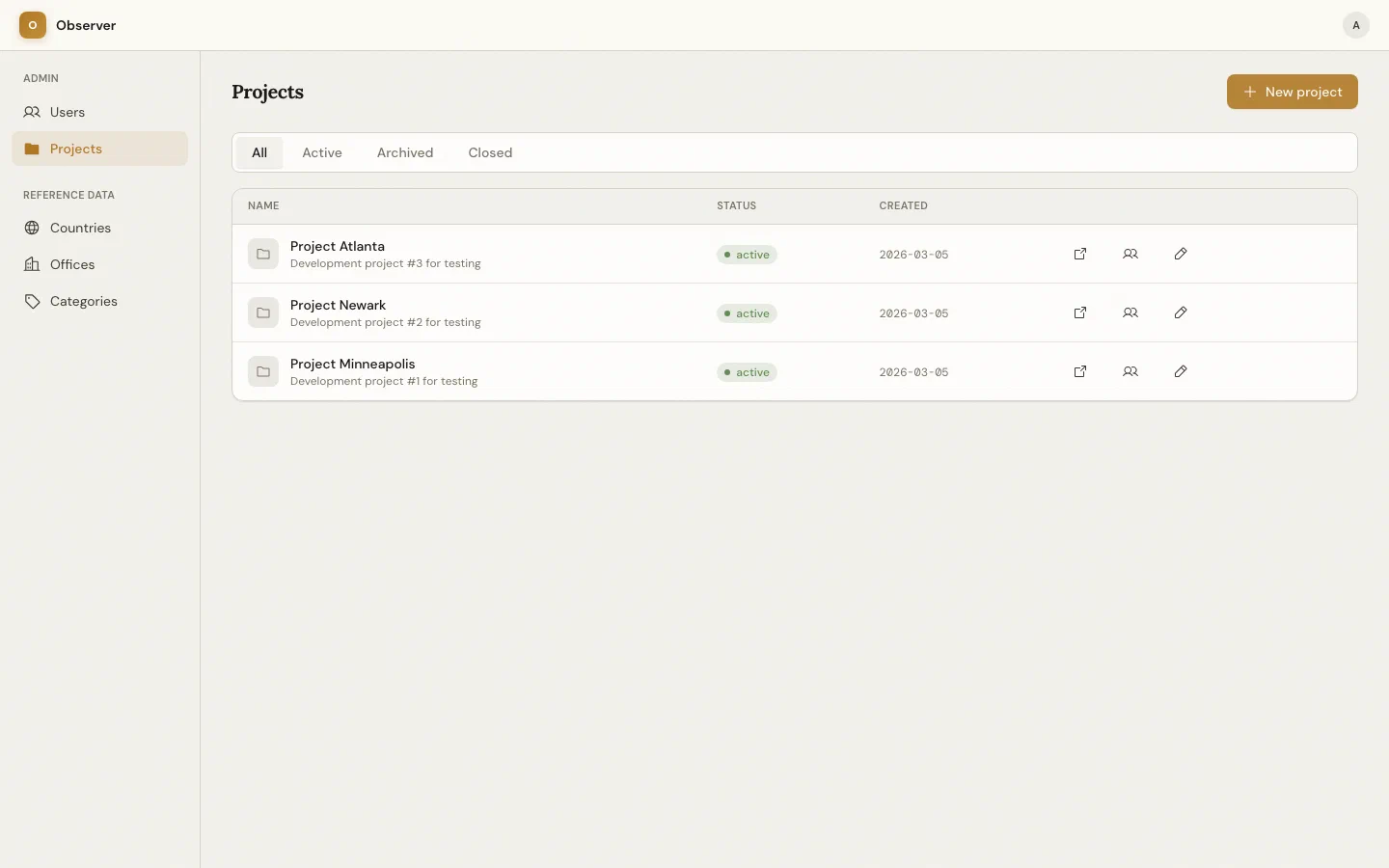
A single view of all projects you have access to.
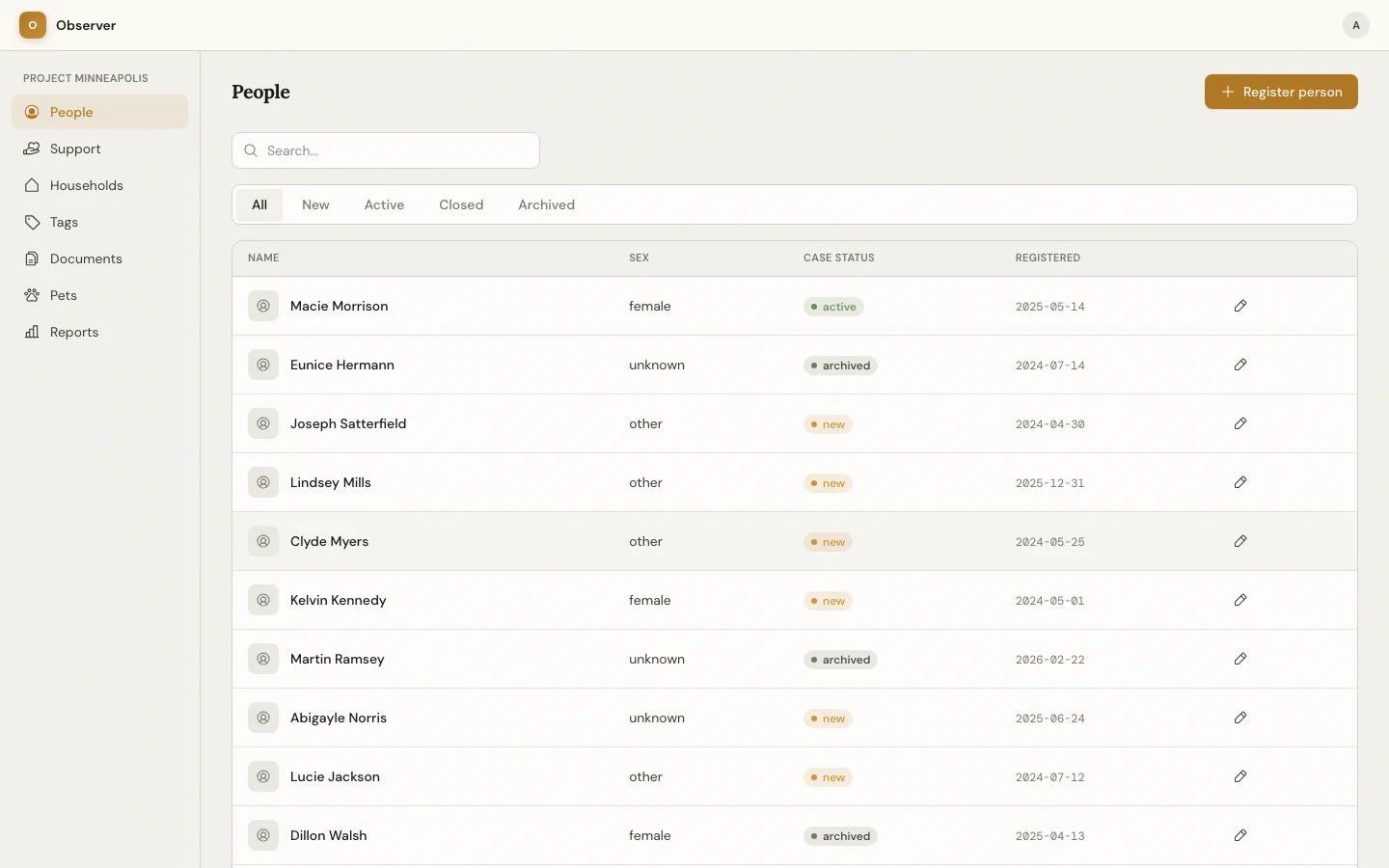
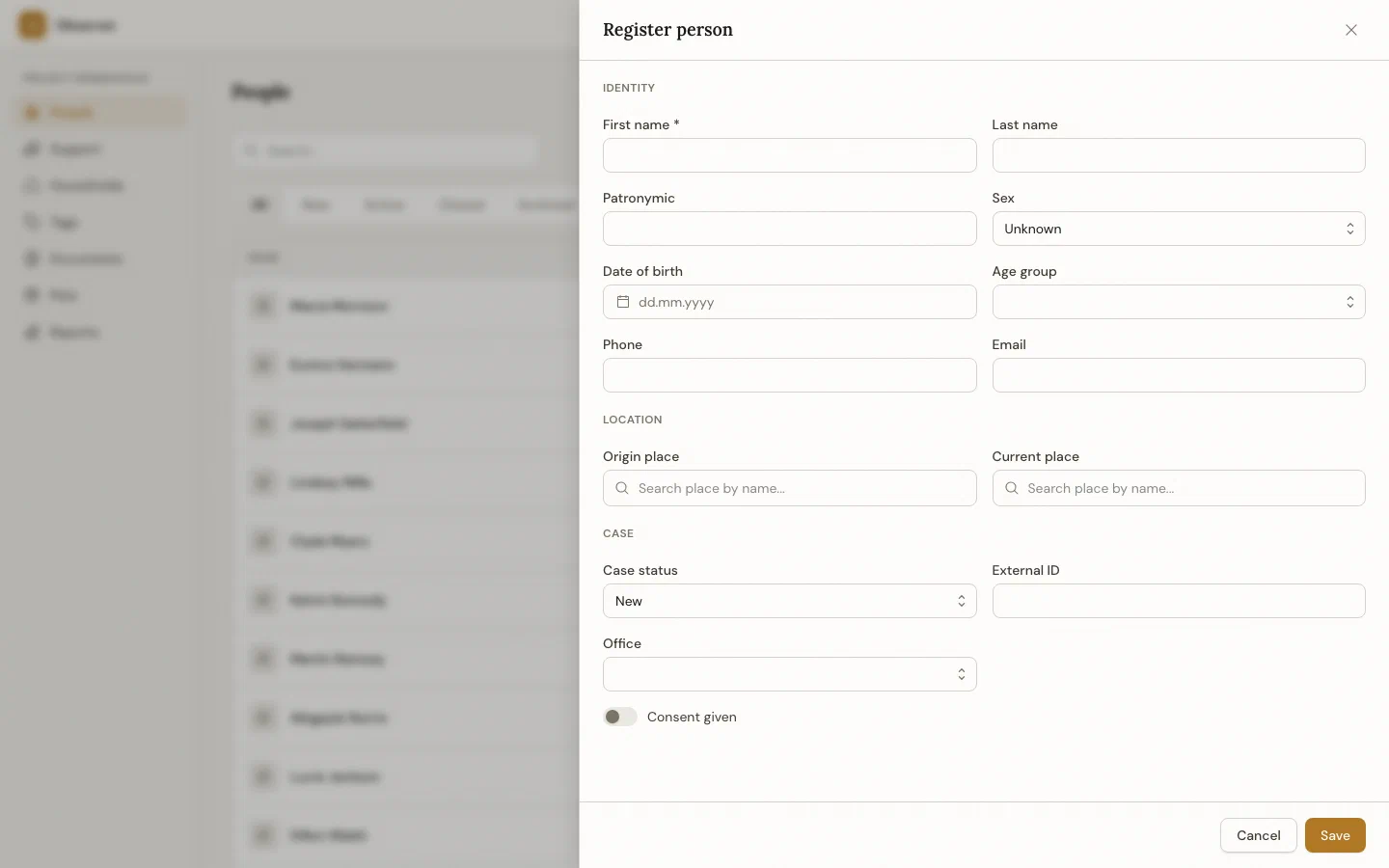
Register displaced persons, track demographics, and manage case status. The registration drawer captures name, contact, origin, and category in one step.
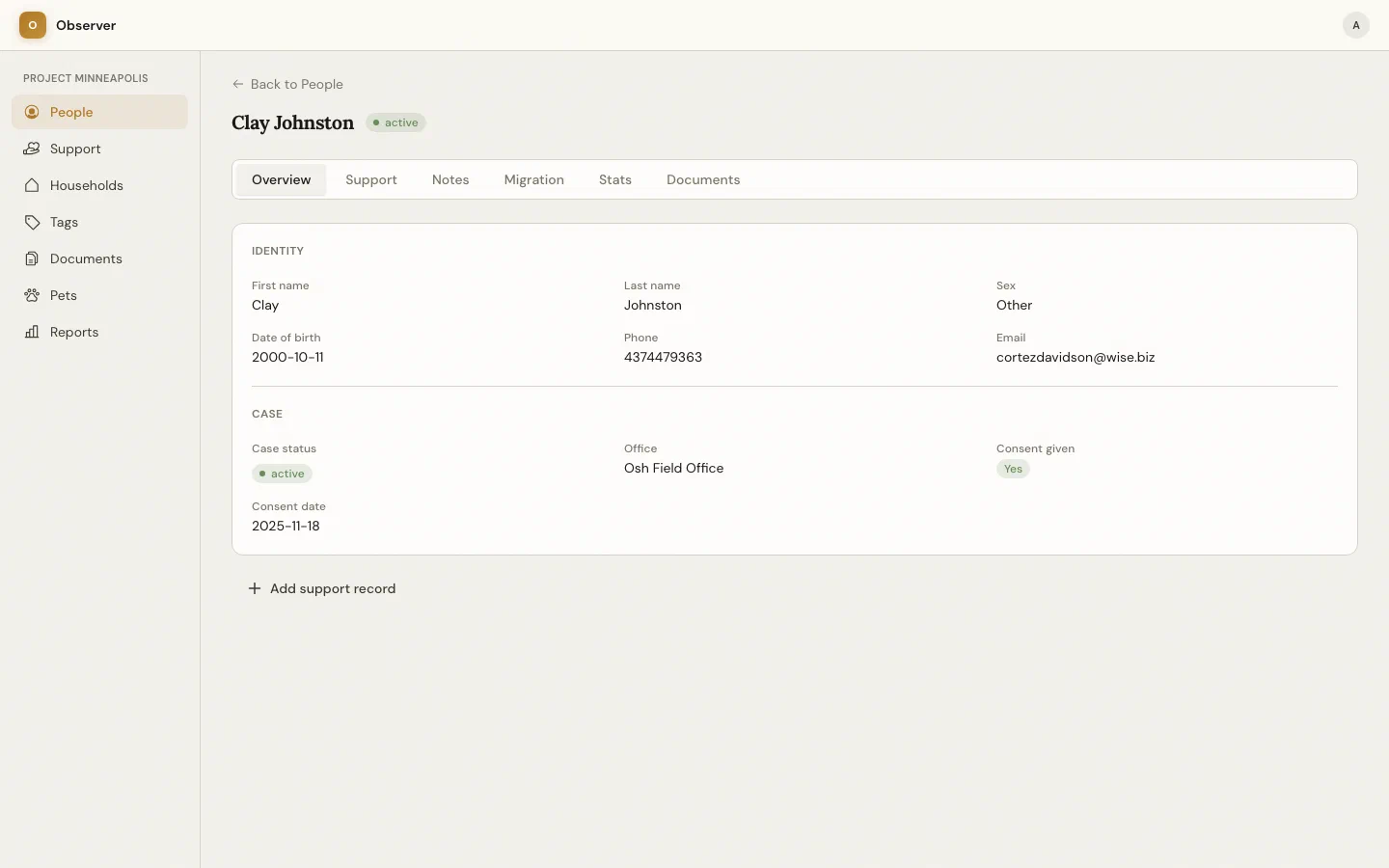
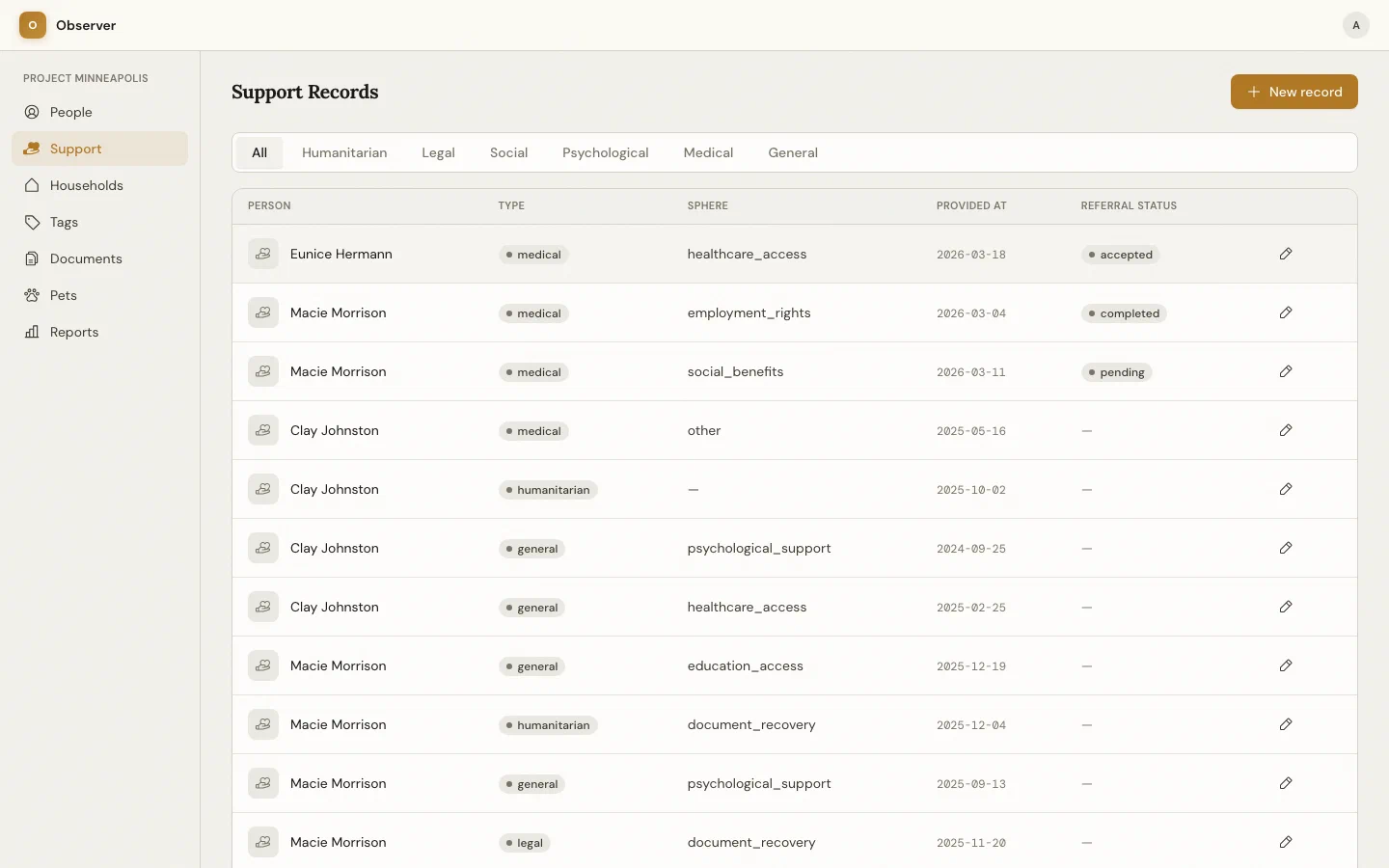
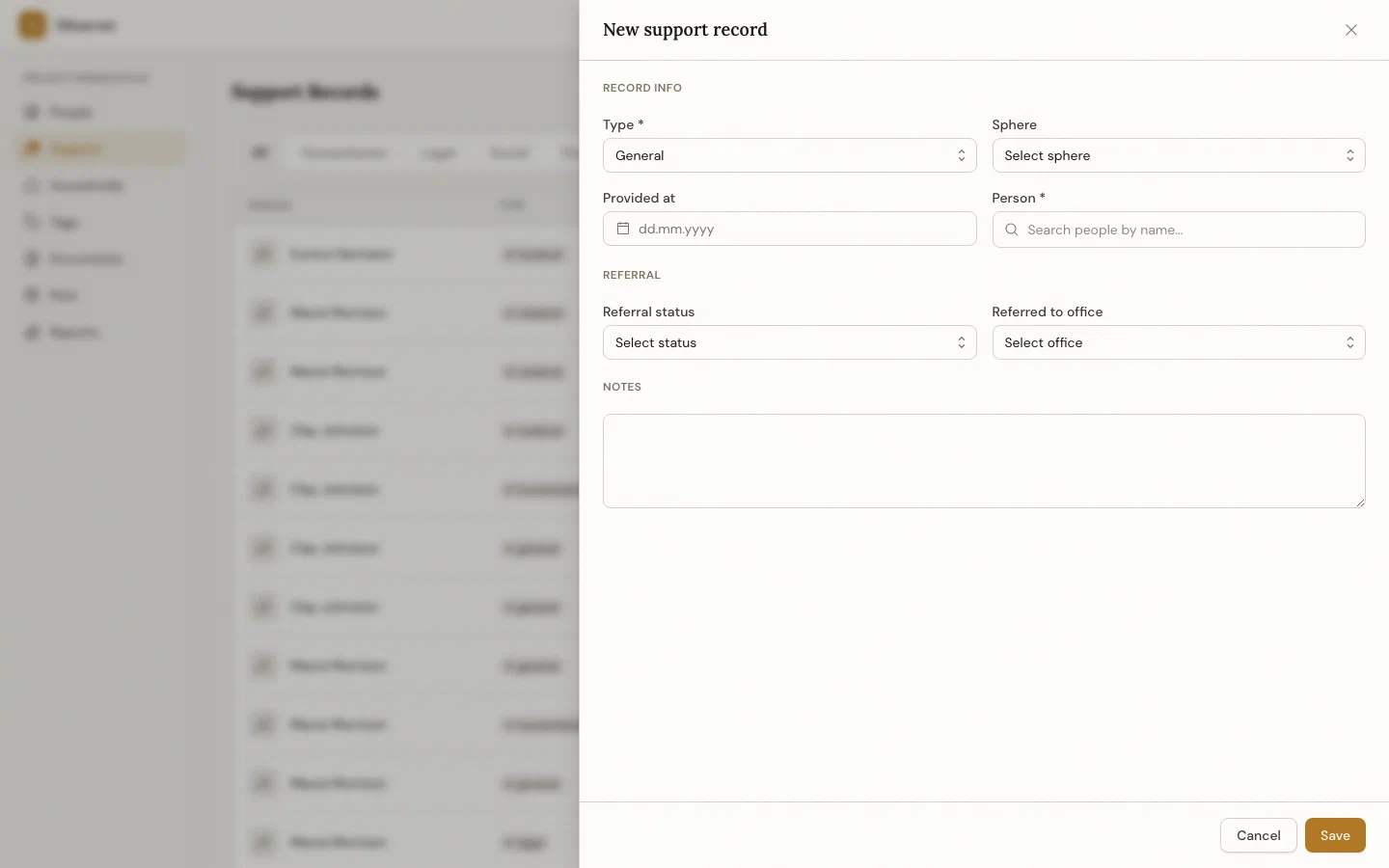
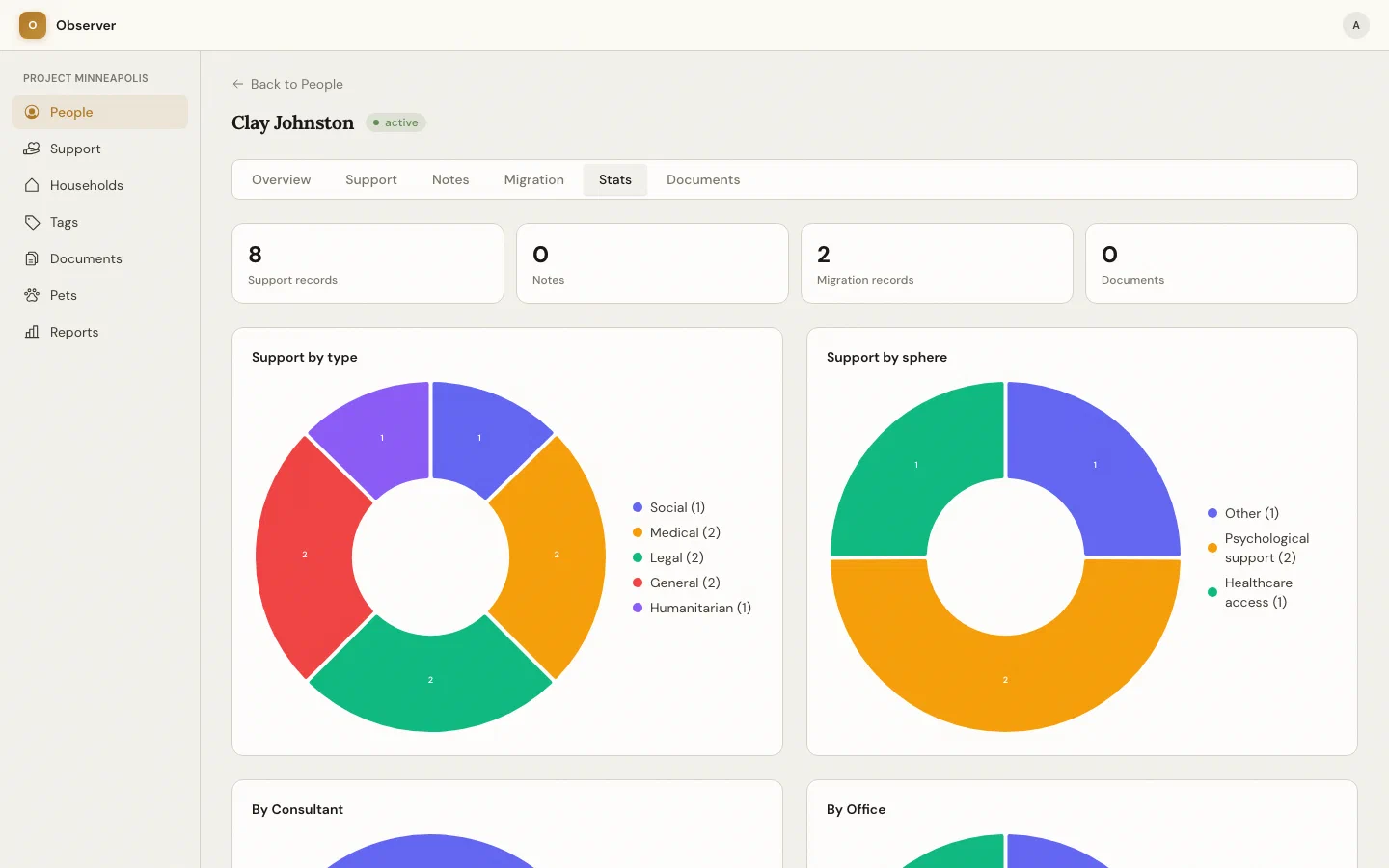
Track consultations, legal aid, psychosocial support, and referrals. Each record is typed by support sphere and linked to a person.
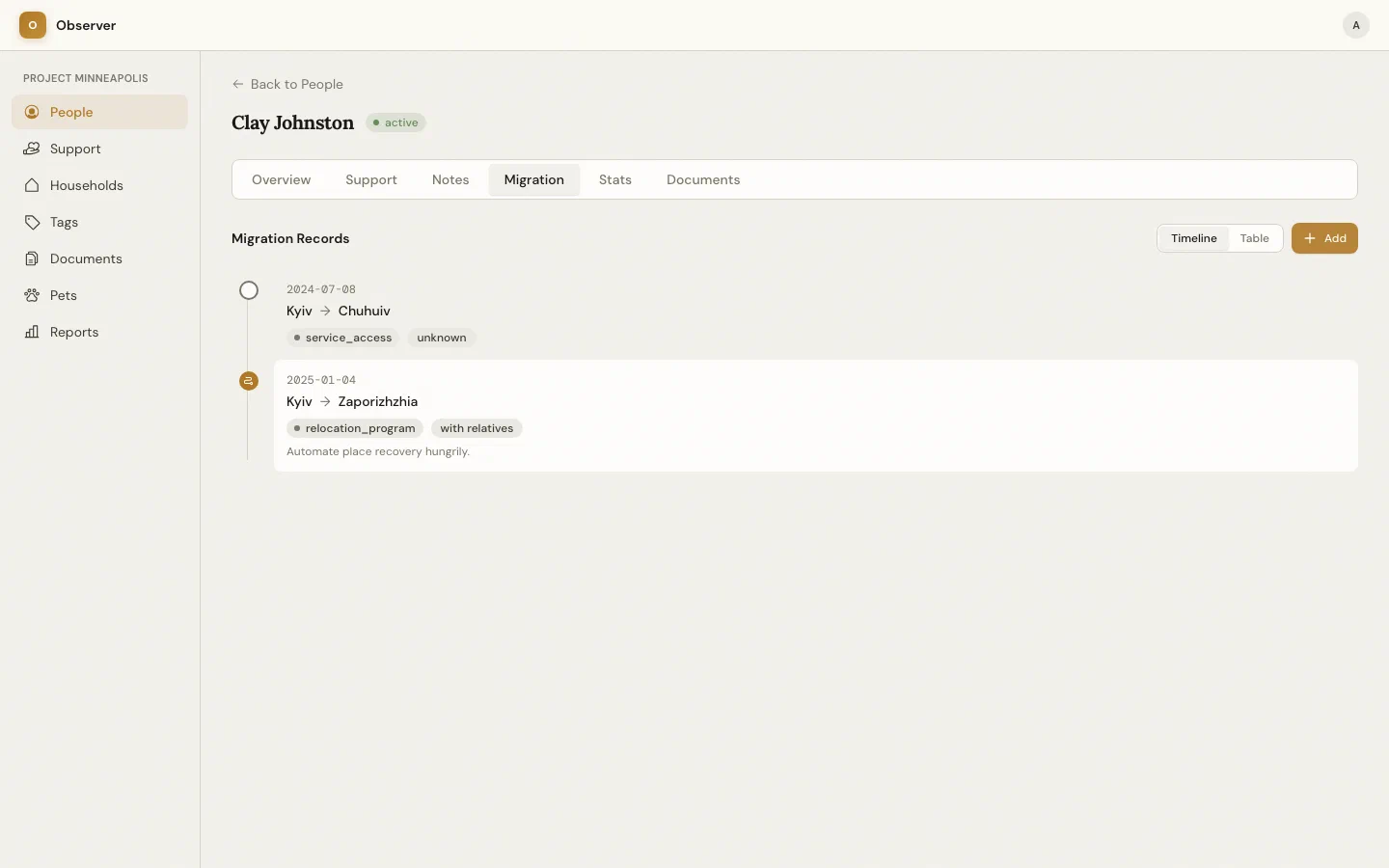
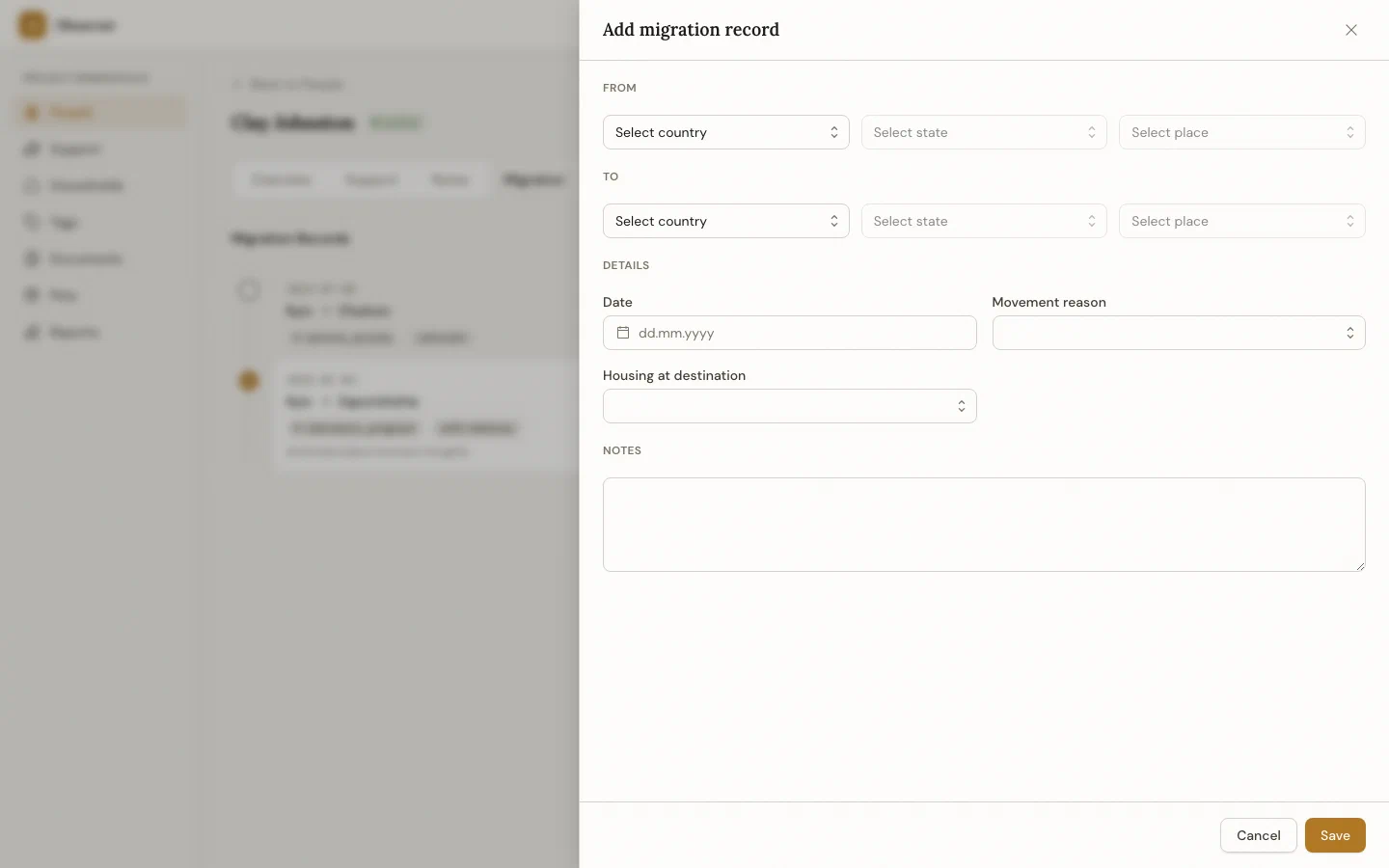
Document movement history — origin, destination, reason, and housing at arrival. IDP status is derived from geography automatically.
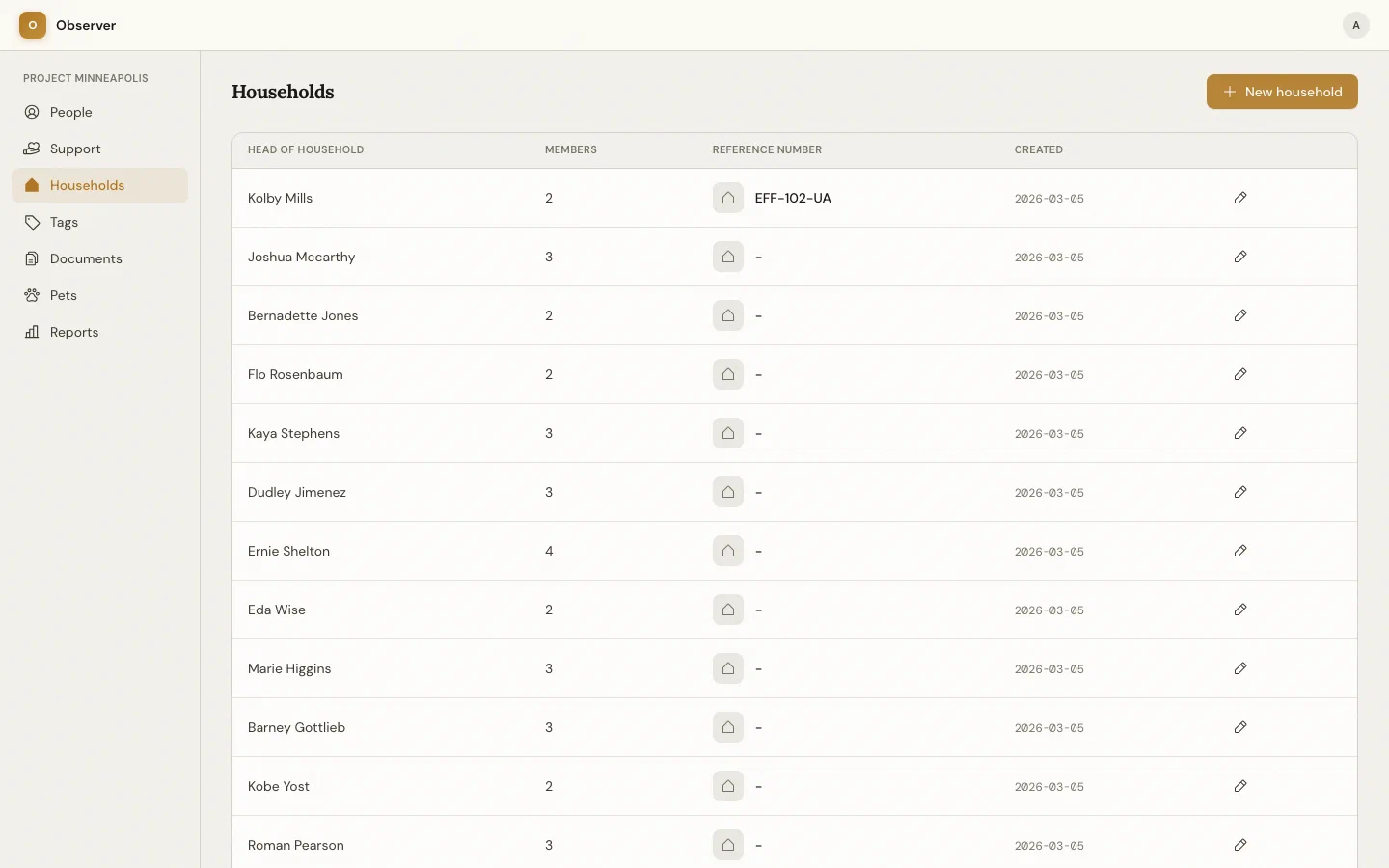
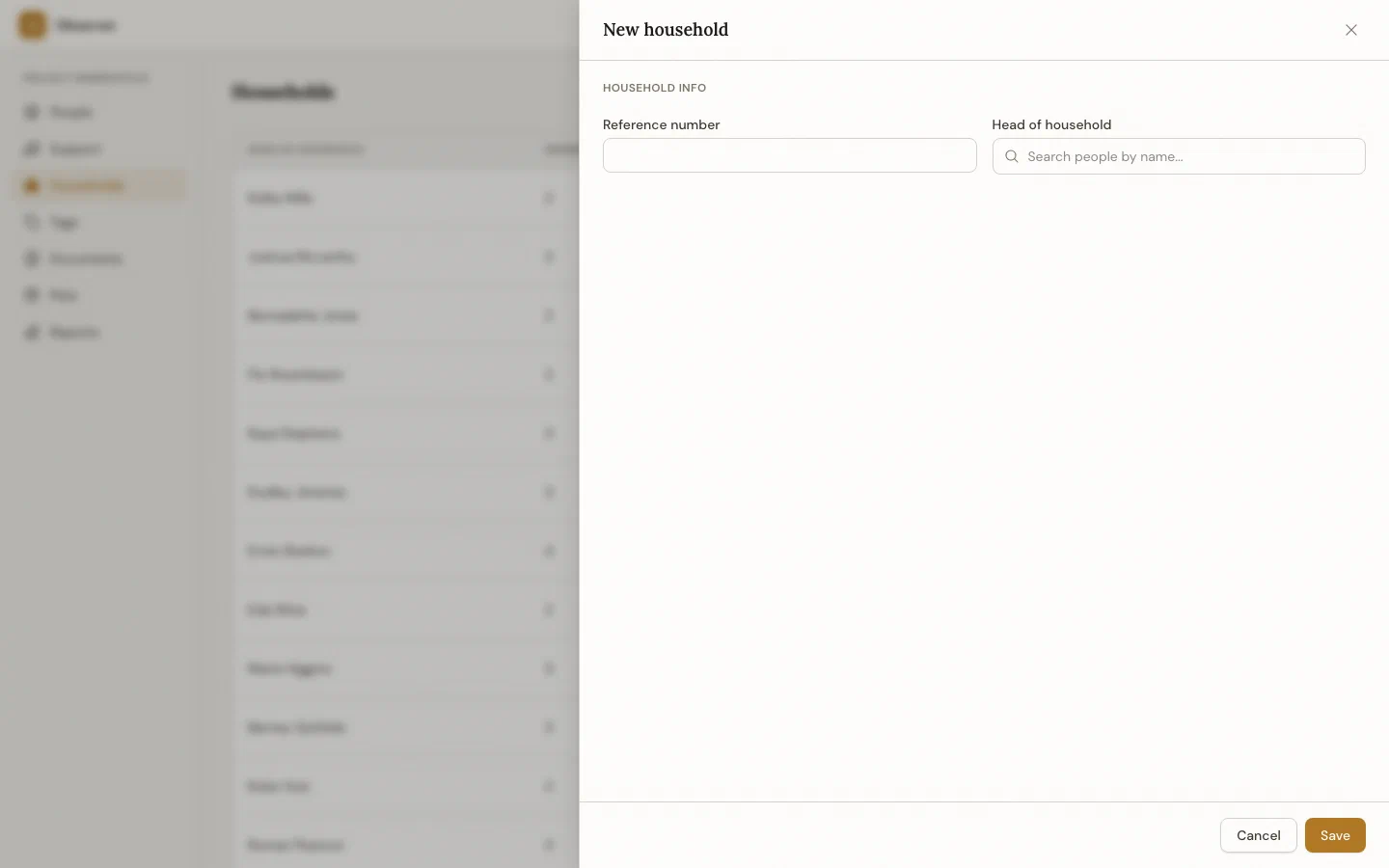
Group people into family units with typed relationships (head, spouse, child, parent, sibling). Household data powers family-level reporting.
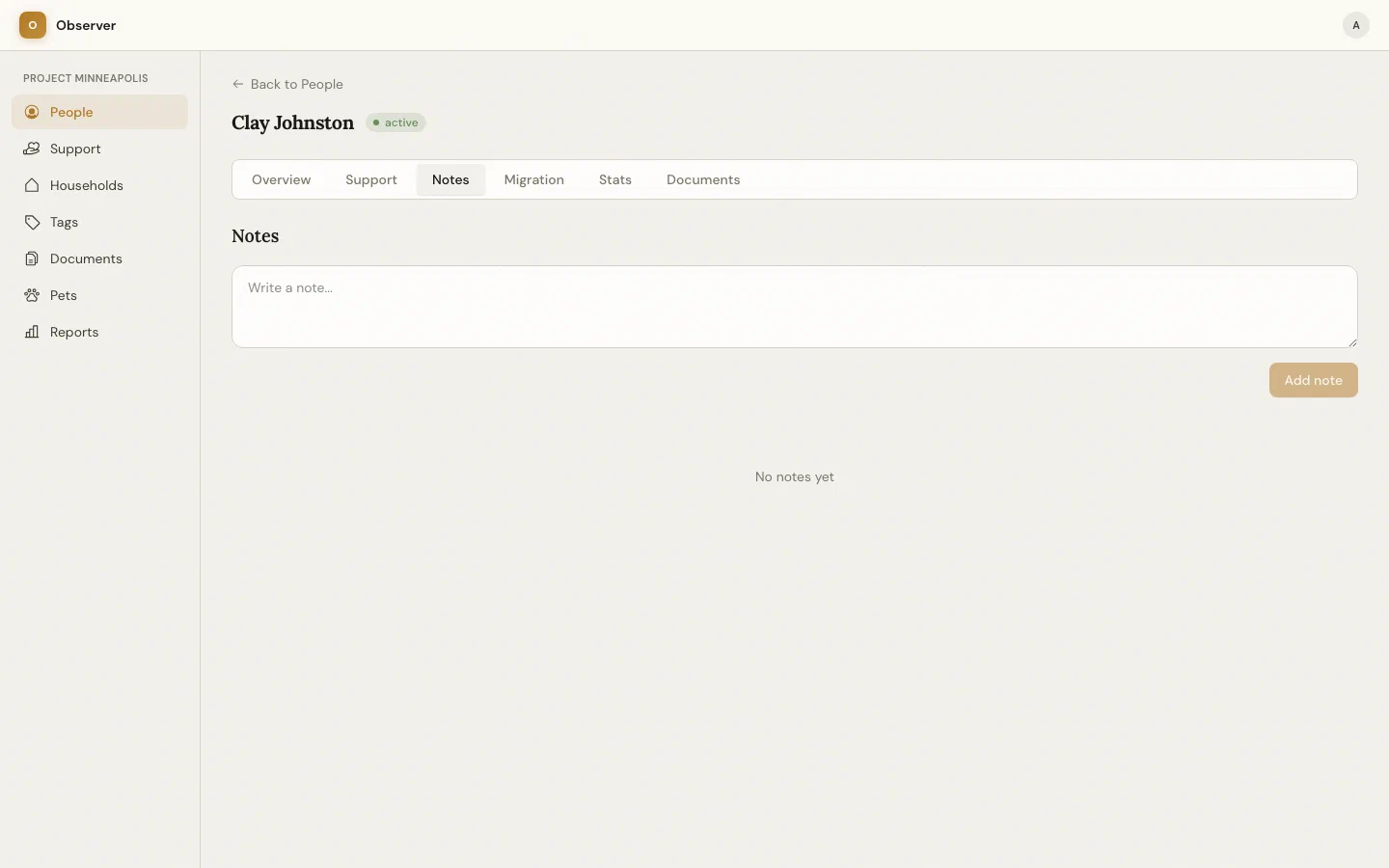
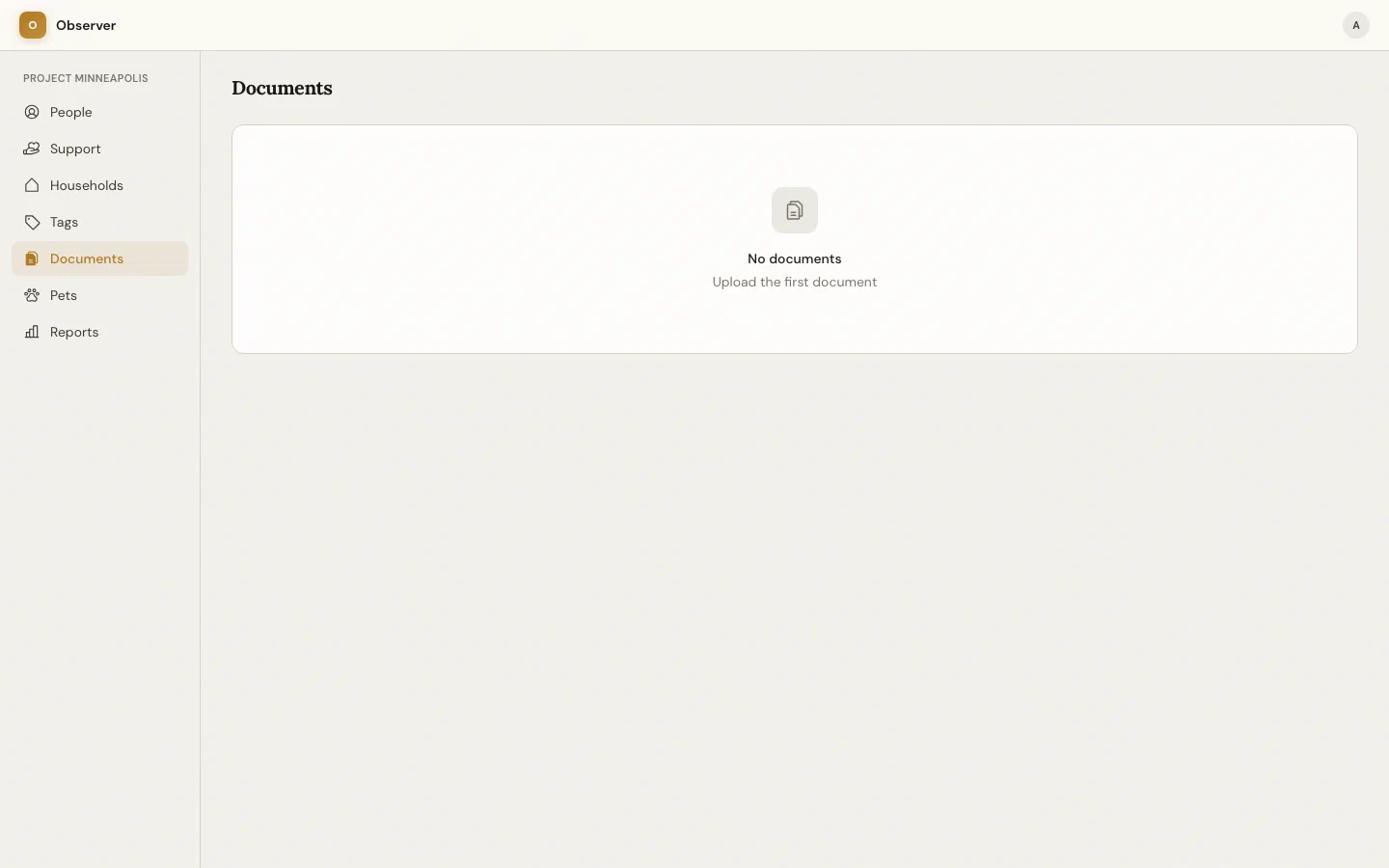
Attach case notes and documents to any person record. Notes support inline editing.
Organize and filter people with project-scoped tags.
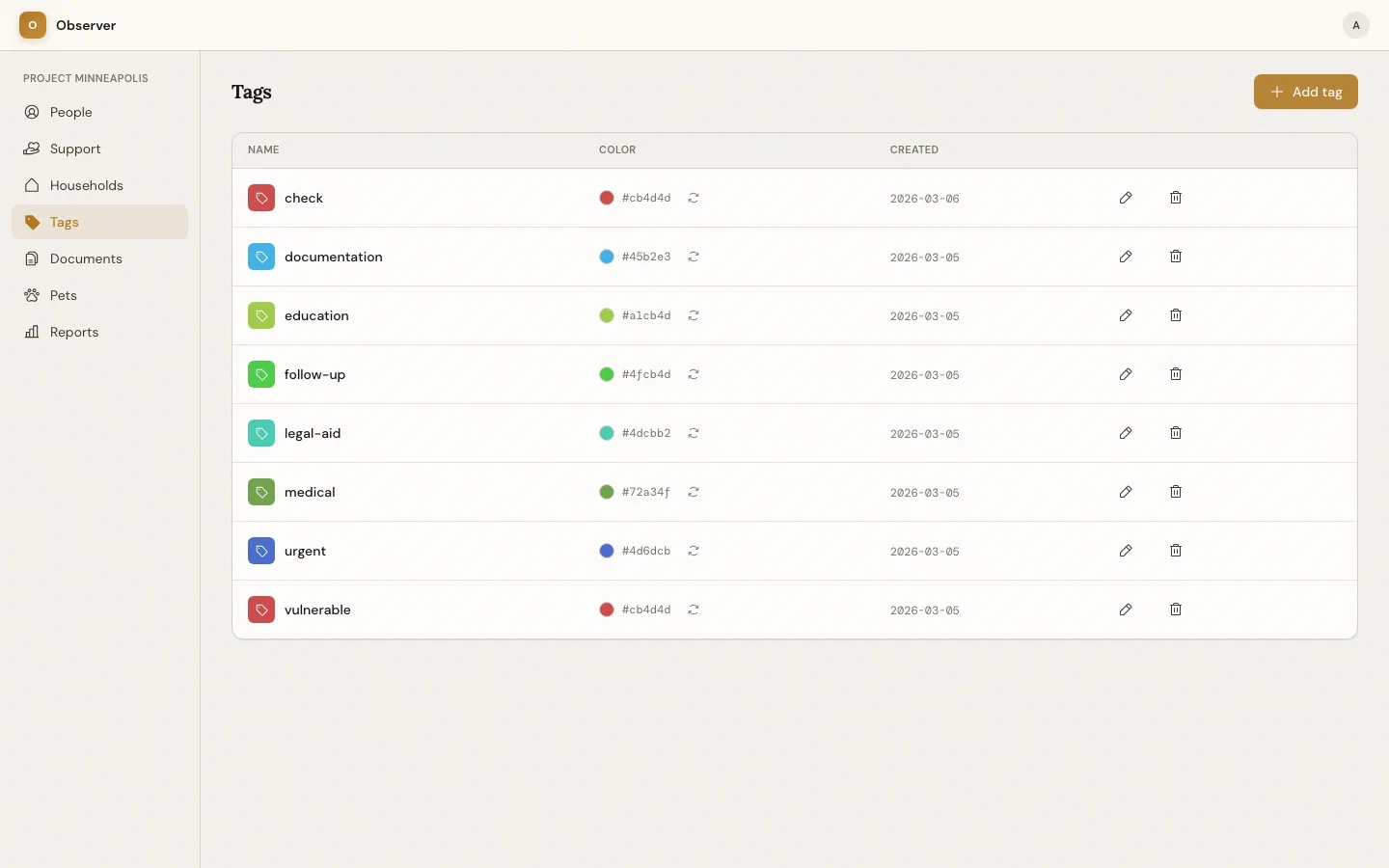
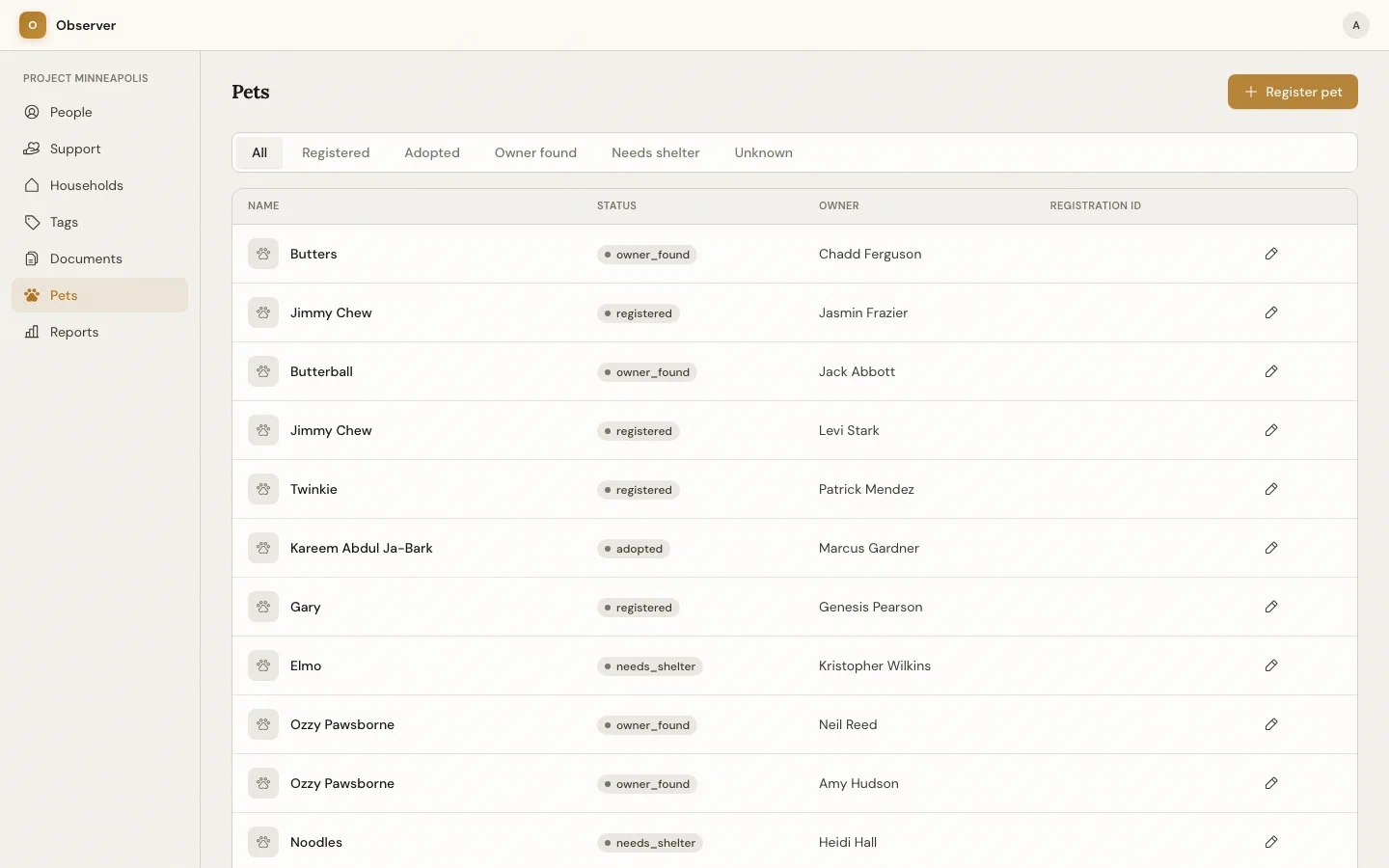
Track pets belonging to displaced persons — status, type, and ownership.
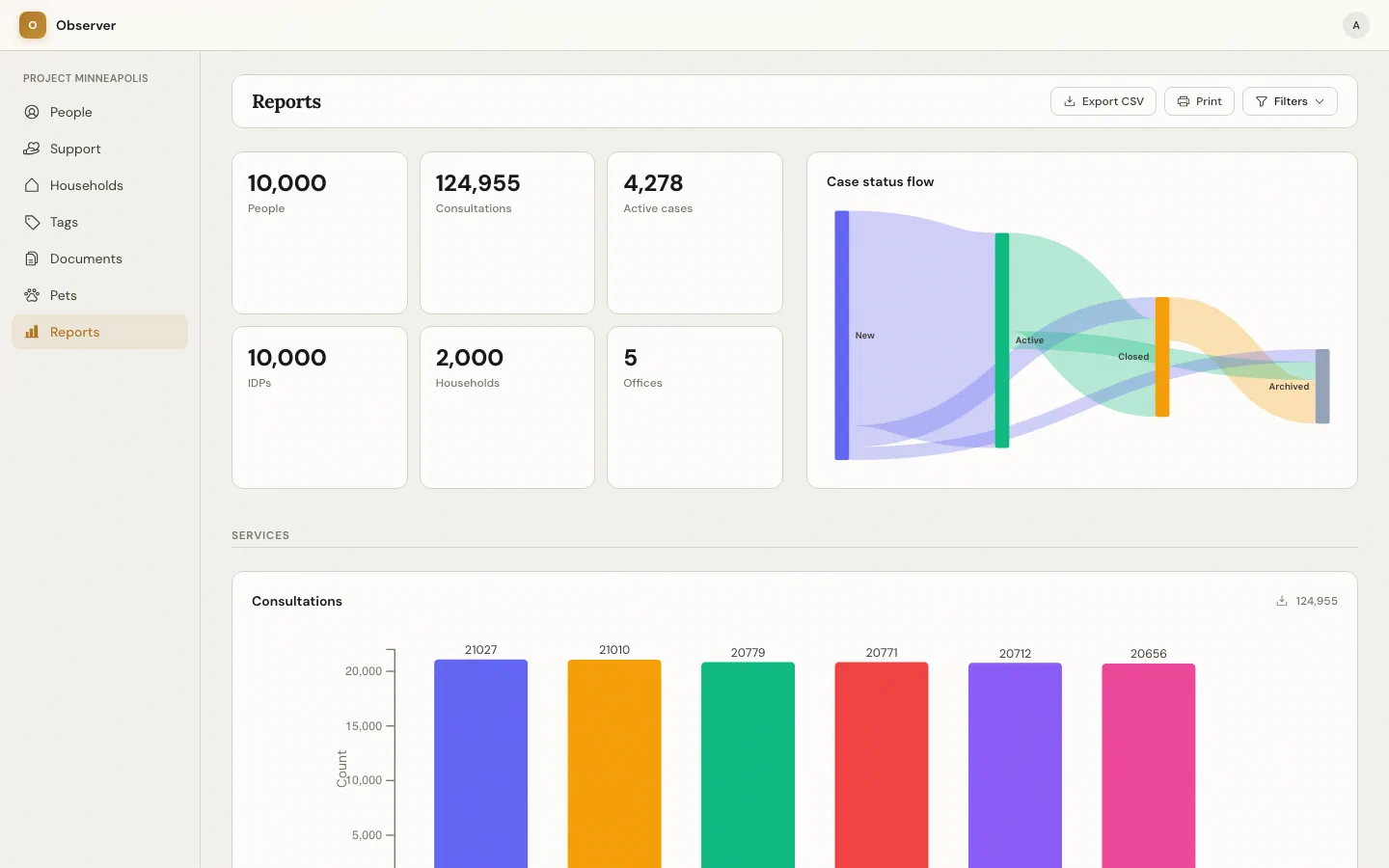
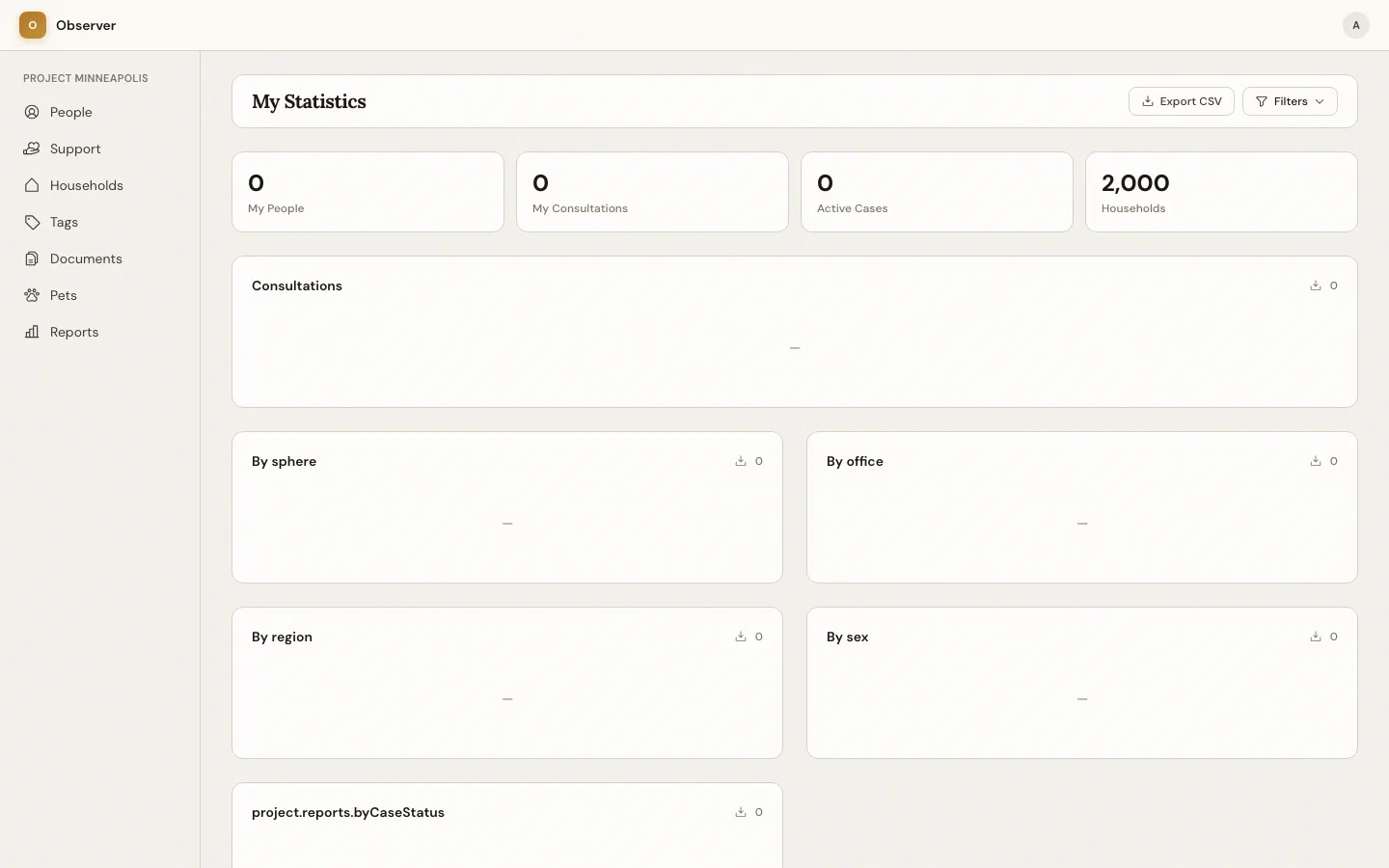
12 report dimensions with filterable breakdowns — consultations, demographics, geography, support spheres, and family units.
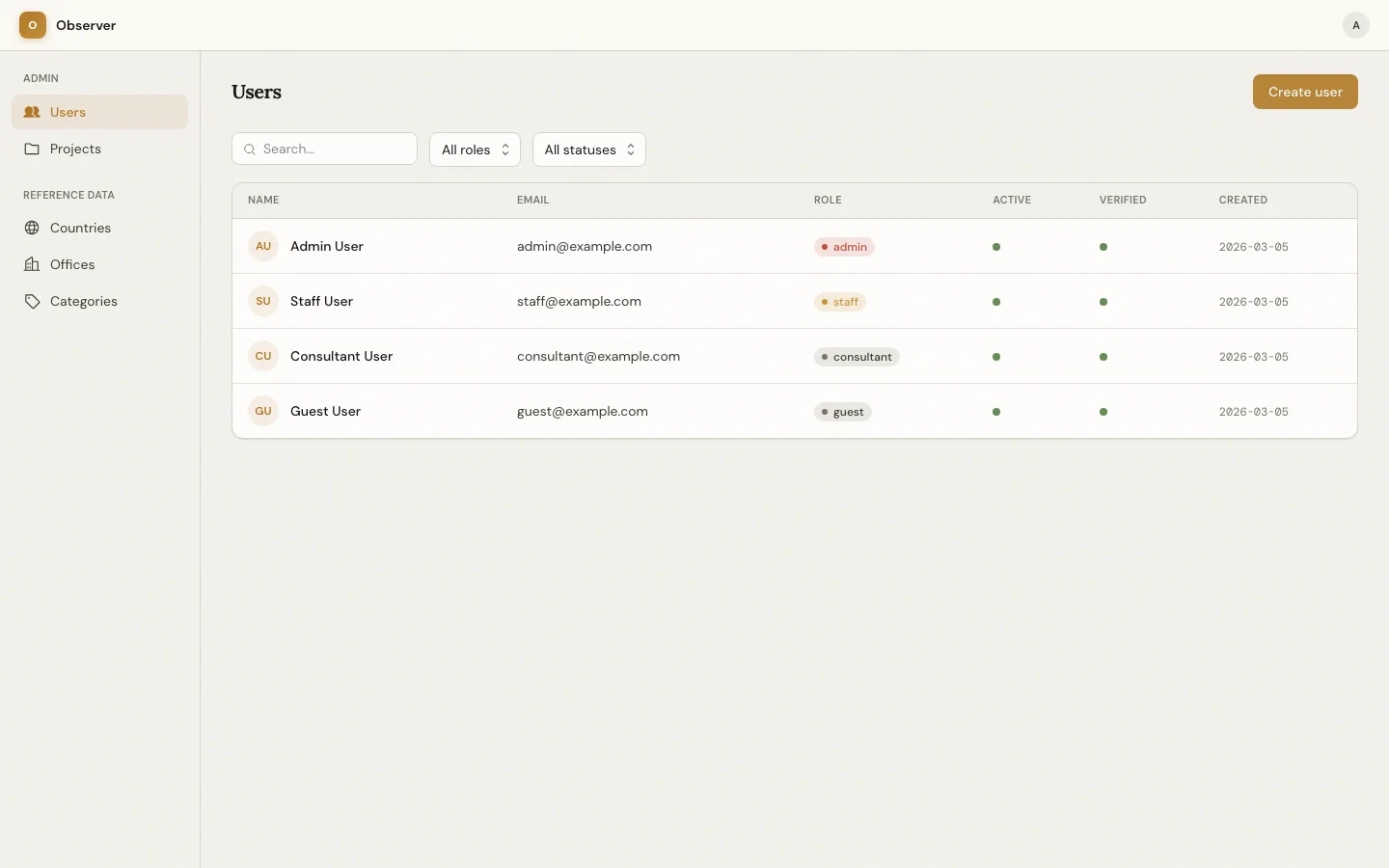
Manage users, projects, permissions, and reference data (countries, states, offices, categories).
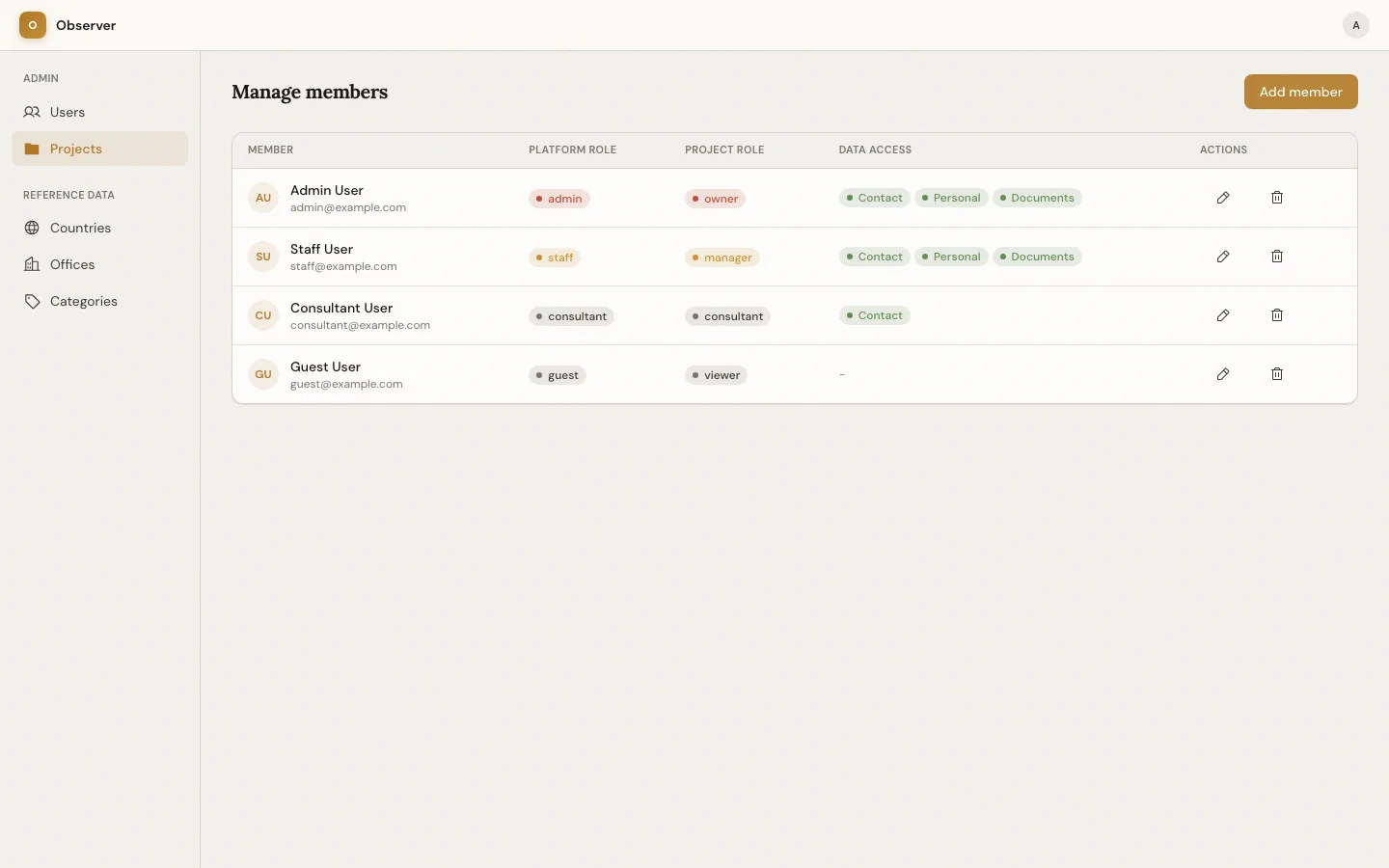
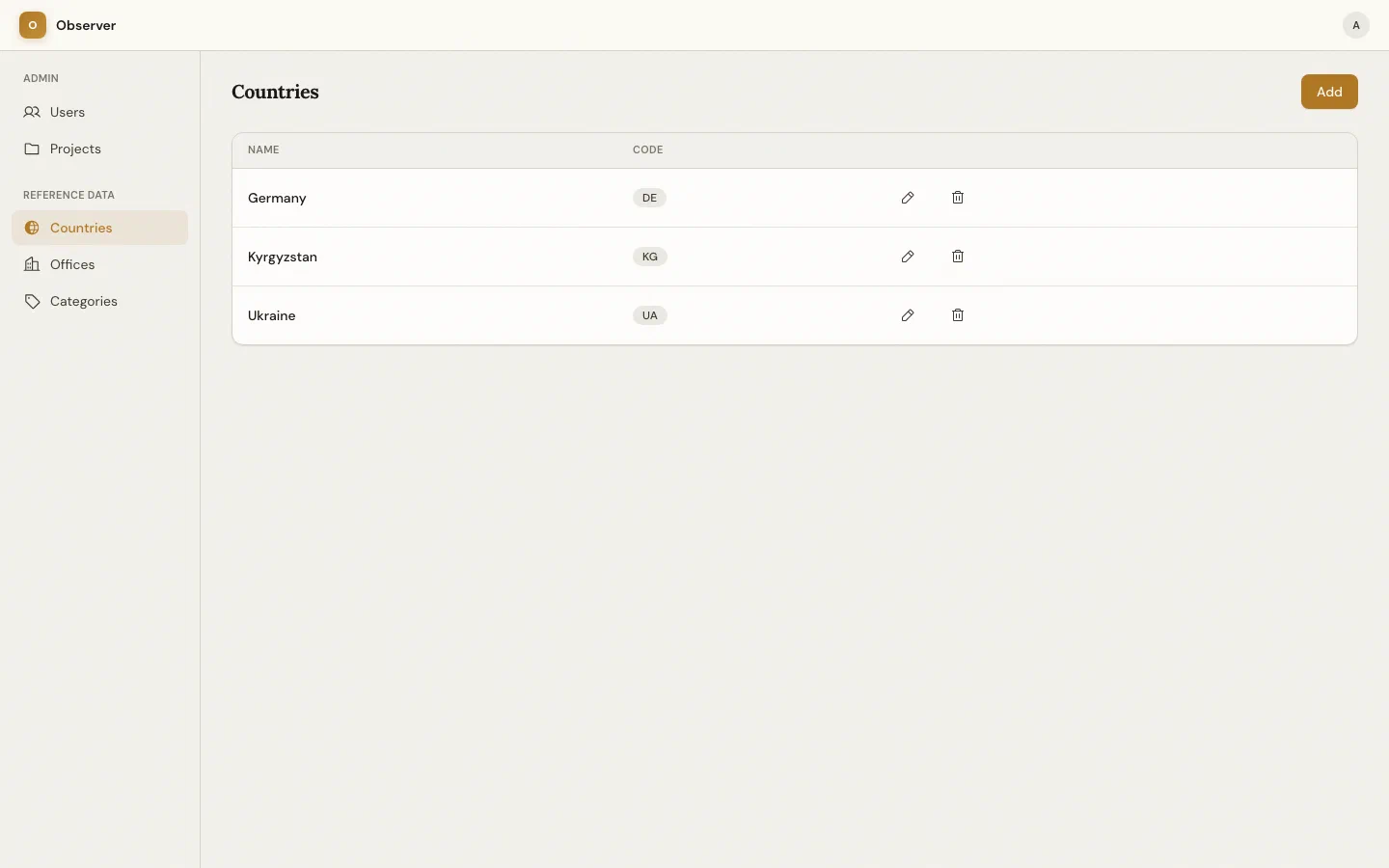
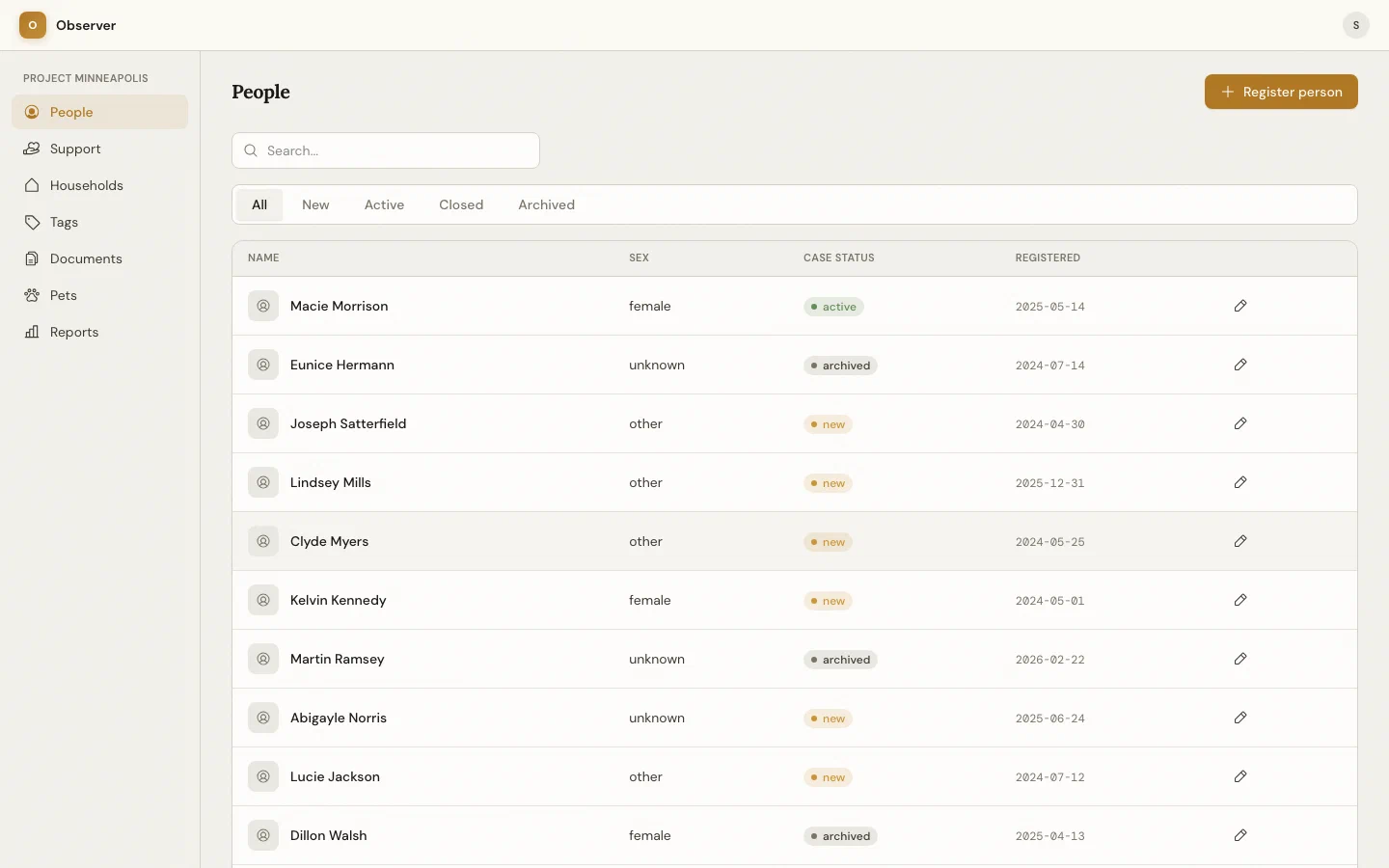
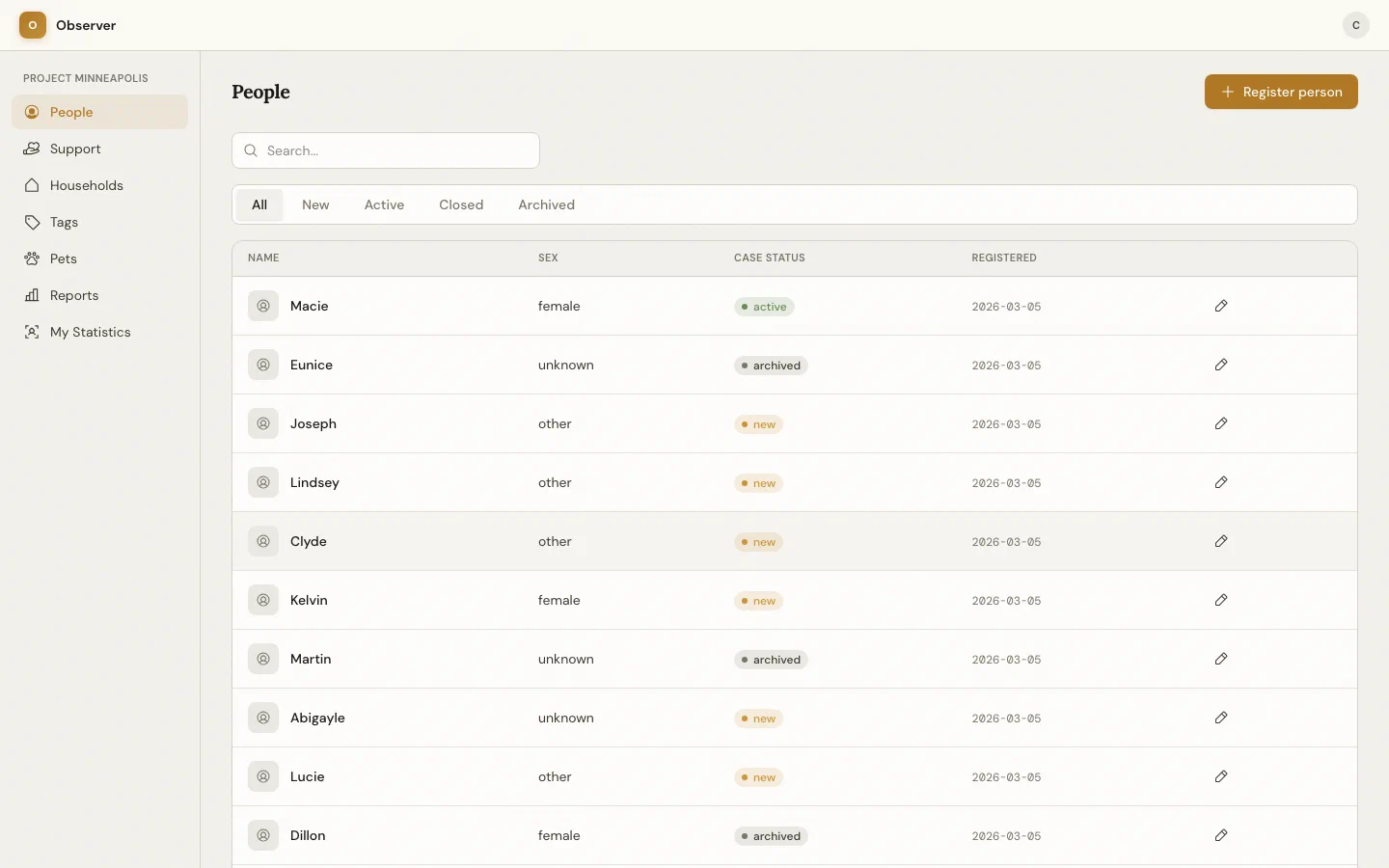
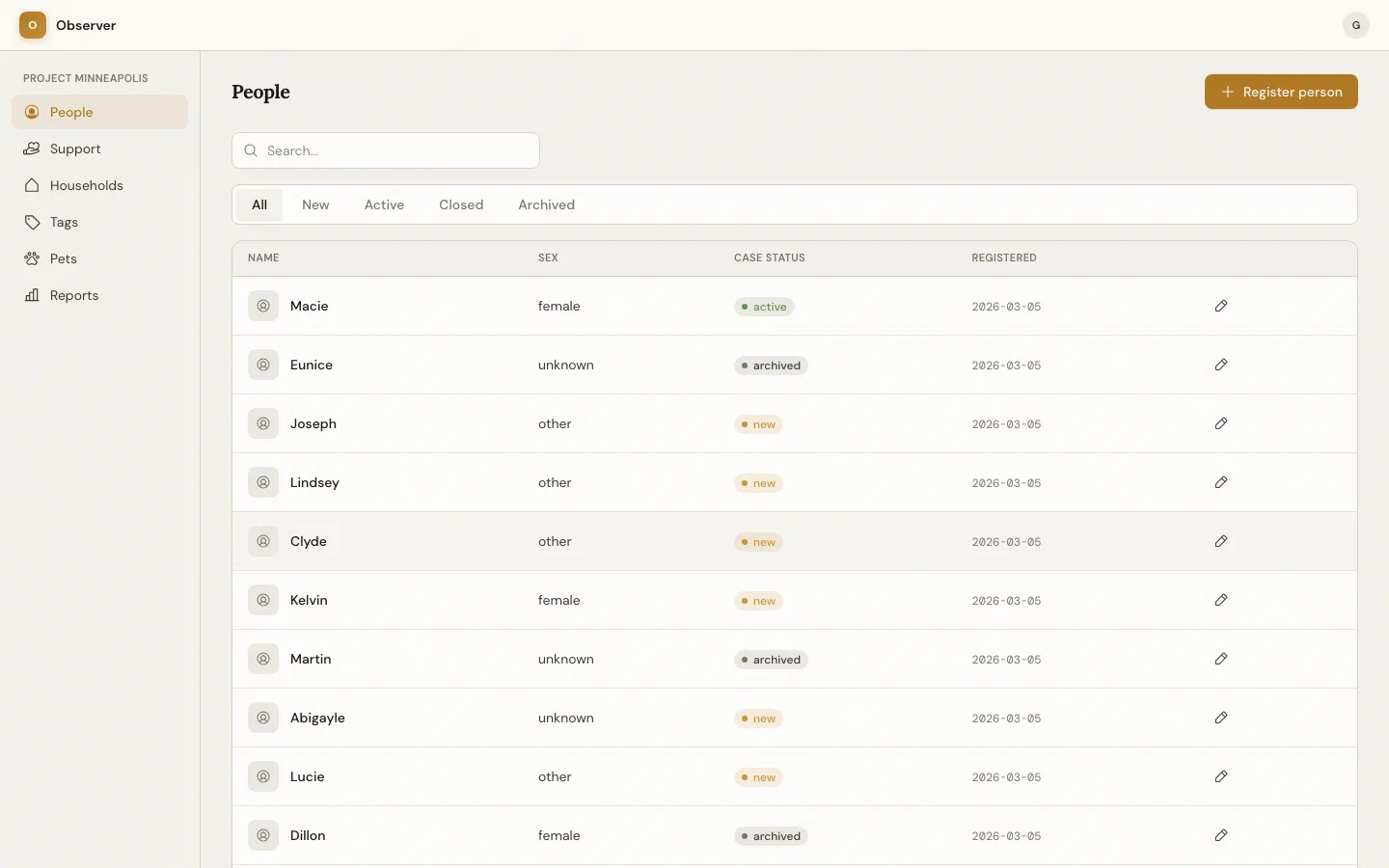
The same page looks different depending on your role. Platform roles (admin, staff, consultant, guest) combine with project roles and three sensitivity flags to control exactly what each user can see and do.
Admin
Staff
Consultant
Guest
The UI ships with six languages: English, Ukrainian, Russian, German, Turkish, and Kyrgyz (Latin script). Kyrgyz uses a custom Latin transliteration because the official Kyrgyz Latin alphabet was adopted in 2023 and is not yet supported by standard translation tools — we maintain our own transliteration rules to provide accurate, native-feeling text for Central Asian deployments.